Red Cedar Homes
How Builders Value Land: The Residual Land Value Method
A builder values your land by what is left after building costs and profit come out of projected home sales. Learn the residual method and what moves the number.
How much is my land worth to a builder? It is worth what is left after the builder subtracts every cost of building and selling homes on it, plus its profit, from what those homes will sell for. That leftover number is called the residual land value, and it is the most a builder can pay. If you are weighing an offer, or getting ready to sell your land to a homebuilder, this is the math behind the number.
The method explains why two builders can look at the same tract and offer very different prices, and why an offer can sit well above or below your tax value.
How much is my land worth to a builder: the residual formula
Homes England, the UK government housing agency, states the method in one line: gross development value minus total development costs, including profit, equals residual land value. The same arithmetic applies to a tract in Greenville or Charlotte. A builder works through it in this order:
Count the homes. How many lots the rules and the site allow. This is lot yield.
Price the homes. What each home will sell for, based on recent new-home sales nearby.
Subtract vertical construction. The cost to build each house.
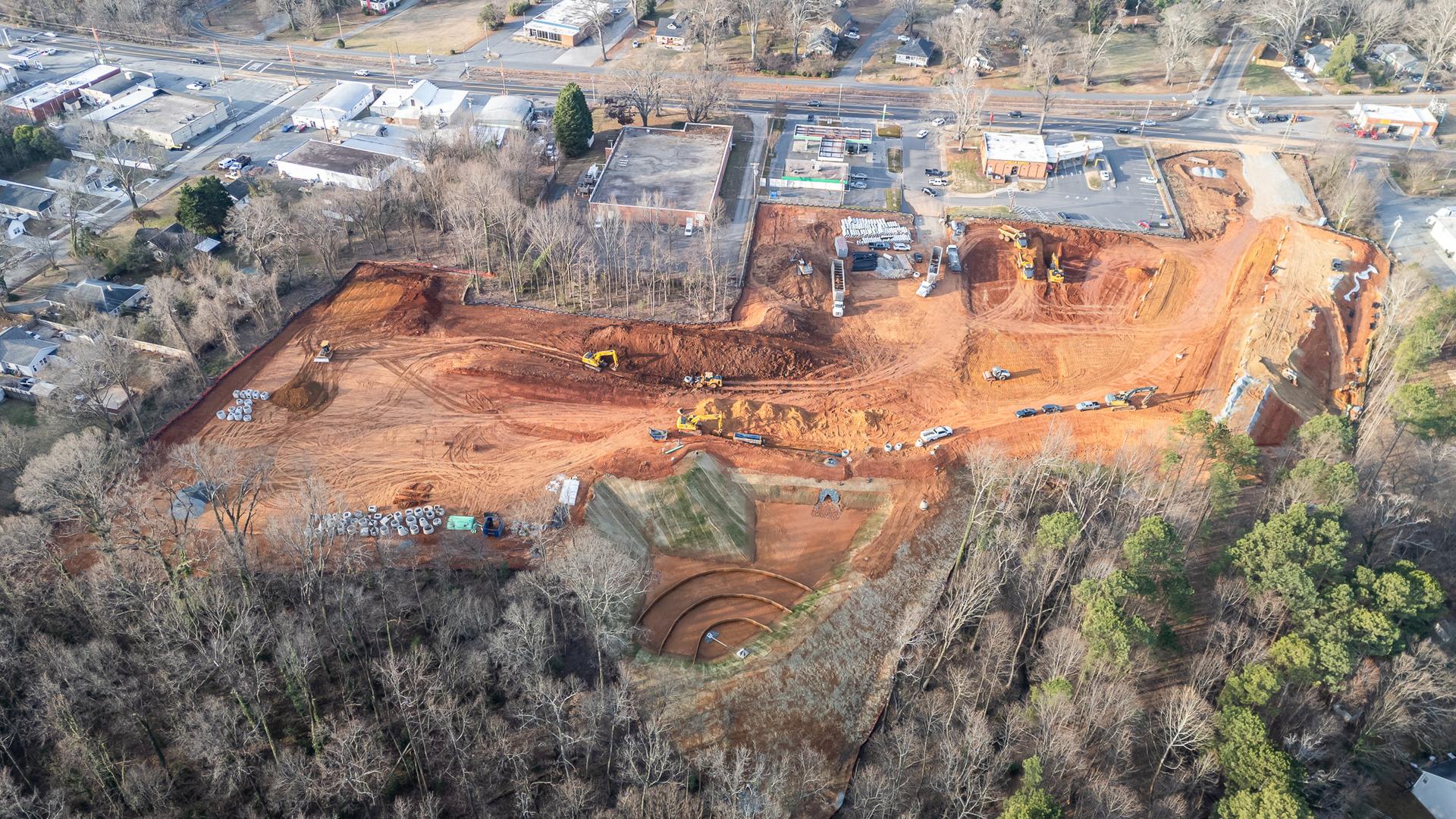
Subtract land development. Clearing, grading, roads, water, sewer, stormwater, and engineering.
Subtract soft costs. Permits, impact and tap fees, surveys, design, insurance, and taxes during the build.
Subtract financing, selling costs, and overhead. Interest, commissions, marketing, and the cost of running the company.
Subtract profit. The margin the builder needs to take the risk.
What remains is the land value. Then the builder adjusts it for time and risk.
Where the money goes in a new home
National survey data shows how small the land share is next to everything else. In the National Association of Home Builders 2024 Cost of Construction Survey, the average new home's sales price broke down like this:
Construction cost: 64.4%, a record high for the series, which began in 1998.
Finished lot: 13.7%, the lowest share in the series and down from 17.8% in 2022.
Builder profit: 11.0%.
Overhead and general expenses: 5.7%.
Sales commission: 2.8%.
Financing: 1.5%.
Marketing: 0.8%.
Two points matter for a landowner. First, the 13.7% is a finished lot: graded, with roads and utilities in. Raw land is worth less because the builder still has to pay to finish it. Second, when construction costs rise faster than home prices, the land share shrinks. Land is the last line in the math, so it absorbs the squeeze. NAHB publishes national averages only; your county can run well above or below them.
A worked illustration
The numbers below are hypothetical. They show how the method works, not what any tract is worth.
Say your tract can hold 20 lots and the homes would sell for $450,000 each.
Projected sales: 20 x $450,000 = $9,000,000
Vertical construction: $5,400,000
Land development: $1,400,000
Soft costs, fees, financing, selling, and overhead: $1,000,000
Profit at 10% of sales: $900,000
Residual land value: $300,000, or $15,000 per lot
Now say a buffer, a wetland, or a frontage rule cuts the yield to 16 lots. Sales fall to $7,200,000. Construction falls to $4,320,000, but roads and sewer do not shrink much, so development only drops to $1,300,000. Other costs fall to $800,000 and profit to $720,000. The residual drops to $60,000. Losing 20% of the lots cut the land value by 80%.
That is the single most useful thing to know about selling land to a builder. Lot yield drives the price more than acreage does.
What sets lot yield in the Carolinas
Lot yield comes from the rules first and the dirt second.
Zoning and development rules
Spartanburg County: the county says it "does not have traditional zoning that dictates the type of development for particular parcels." Development regulations such as setbacks and buffer yards still apply based on the proposed use. Road frontage is a hard limit: 75 feet per lot where right-of-way has not been dedicated, 50 feet where it has, and 100 feet for certain lots on arterial or collector roads.
Charlotte: the Unified Development Ordinance controls what each lot can hold, and it changes. In June 2024, City Council approved a text amendment that revised triplex allowances and created a compact residential option in certain Neighborhood 1 districts. A rule change like that can add or remove homes from your yield.
Greenville and other counties and cities: confirm which government has jurisdiction first. A parcel inside city limits follows city zoning; one outside follows the county.
Sewer or septic
Sewer access usually allows smaller lots and more of them. Without it, every home needs its own septic approval. In South Carolina, the Department of Environmental Services (SCDES) must approve and permit a septic system first, and without that permit, the county cannot issue a building permit. In North Carolina, G.S. 130A-336 requires an improvement permit from the local health department before a home is built on a site without an approved wastewater system.
The site itself
Slope, rock, soils, floodplain, wetlands, stream buffers, and stormwater ponds all take land out of the yield or add cost to the development line. Access matters too: a tract with one narrow road frontage may not support a subdivision street.
Why builder offers differ
Two builders can run the same method and land far apart. The usual reasons:
Product: a builder of townhomes or smaller infill homes may get more units, or a higher price per lot, than a builder of large detached homes.
Price assumptions: one builder may have sales in the submarket and price with confidence; another may price conservatively.
Profit hurdle: different companies need different margins to take the same risk.
Time: money paid for land today is worth more than the same money in two years. If rezoning or utility work must happen first, the builder discounts the price for the wait.
Risk: a tract that needs rezoning, a sewer extension, or a wetland permit carries risk that a builder prices in, or asks to remove through due diligence before closing.
Builder value vs. tax value and appraisals
Your tax bill is not a builder's price. A builder values land by what it can produce. The county values it for taxation under rules set by state law, and in South Carolina those rules depend on use, as our guide to South Carolina property tax rates explains.
Farmland shows the gap most clearly. Under S.C. Code § 12-43-220(d), land actually used for agriculture is valued on its "productive earning power based on soil capability," not on what a developer would pay. A working farm can carry a low tax value and a much higher value to a builder. The same section provides for rollback taxes when agricultural land changes use, so ask your closing attorney who pays them before you sign.
How to get a stronger offer
Know your parcel. Have the deed, any recorded plat, the parcel ID, and acreage ready.
Find the rules. Ask the planning office which zoning or development rules apply and what lot sizes and frontage they require.
Ask about utilities. Find out whether public water and sewer reach the property and who provides them.
Share what you know. Old surveys, perc tests, or wetland studies reduce a builder's unknowns, and unknowns lower offers.
Ask how the offer was built. A builder should be able to tell you its assumed lot count and product type, even if it keeps its cost detail private.
If you would rather keep the land and build on it, a fee build on your own lot is another path; Red Cedar builds on your lot for a fixed vertical price. Landowners and lot developers can also see how Red Cedar works with owners on its build with Red Cedar Homes page.
Frequently asked questions
How do builders calculate land value?
Most use the residual method. They estimate the number of homes the land can hold and what each will sell for, then subtract construction, land development, soft costs, financing, selling costs, overhead, and profit. What remains is the most they can pay for the land, adjusted for how long and how risky the path to building is.
What percentage of a new home's price is the lot?
In the NAHB 2024 Cost of Construction Survey, the finished lot averaged 13.7% of the sales price nationally, the lowest share since the series began in 1998. That figure is for a finished lot. Raw land typically sells for less, because the buyer still pays for grading, roads, and utilities.
Why is a builder's offer lower than what my neighbor got?
Lot yield, utilities, and timing usually explain it. A parcel with sewer, good frontage, and approved zoning can hold more homes sooner than one that needs septic, a road, or a rezoning. Small differences in yield cause large differences in land value, because land is the amount left after every other cost.
Does rezoning make my land worth more to a builder?
It can, if the new zoning allows more or better homes. But the builder carries the time, cost, and risk of getting approval, so an offer that depends on rezoning is usually lower or conditioned on approval. Land with the right zoning already in place removes that risk from the math.
Submit your property
Red Cedar Homes buys residential-zoned or rezoning-eligible land in North Carolina and South Carolina: infill lots, in-town parcels, family farms, and development tracts. It is buying in Charlotte, Greenville, and Spartanburg, and it responds to inquiries typically within 3 to 5 business days. Share the address or parcel ID through the sell us your land form, or call 980-890-9381.
Sources
Spartanburg County Planning and Development, Frequently Asked Questions
N.C. Gen. Stat. § 130A-336, Improvement permit and construction authorization
Figures as of October 2026. This is general information, not legal or tax advice. Talk to your attorney or CPA about your situation.