Red Cedar Homes
Land Entitlement Explained: From Raw Land to Approved Lots
Entitlement is the set of approvals that turns raw land into buildable lots. Here is each step in South Carolina and North Carolina, with the statutes that set notice and vesting.
The land entitlement process is the chain of public approvals that turns a parcel into land you are legally allowed to build on. It usually covers zoning for the use and density, approval of a subdivision plat or site plan, and the permits for grading, stormwater, streets, and utilities. In the Carolinas, state law sets the floor for notice, hearings, and vesting, and each county or city adds its own steps.
The land entitlement process is where most of the risk in a raw tract sits. Until the approvals are in hand, nobody knows how many lots the land will yield. That is why builders who work with landowners and lot developers study the approval path before they price a site.
What counts as an entitlement
An entitlement is a government approval that gives a property the right to a specific use and intensity. On a residential tract, these are the approvals that matter:
- Zoning. The district sets the allowed uses, lot sizes, and density. If the current district allows your plan, you build by right. If it does not, you need a rezoning.
- Variance or special exception. A board of zoning appeals can relax a dimensional rule for hardship, or approve a use the ordinance lists as a special exception. In South Carolina, a variance cannot be used to allow a use the district does not permit.
- Subdivision plat or site plan. The layout of lots, streets, and open space, reviewed against the land development rules.
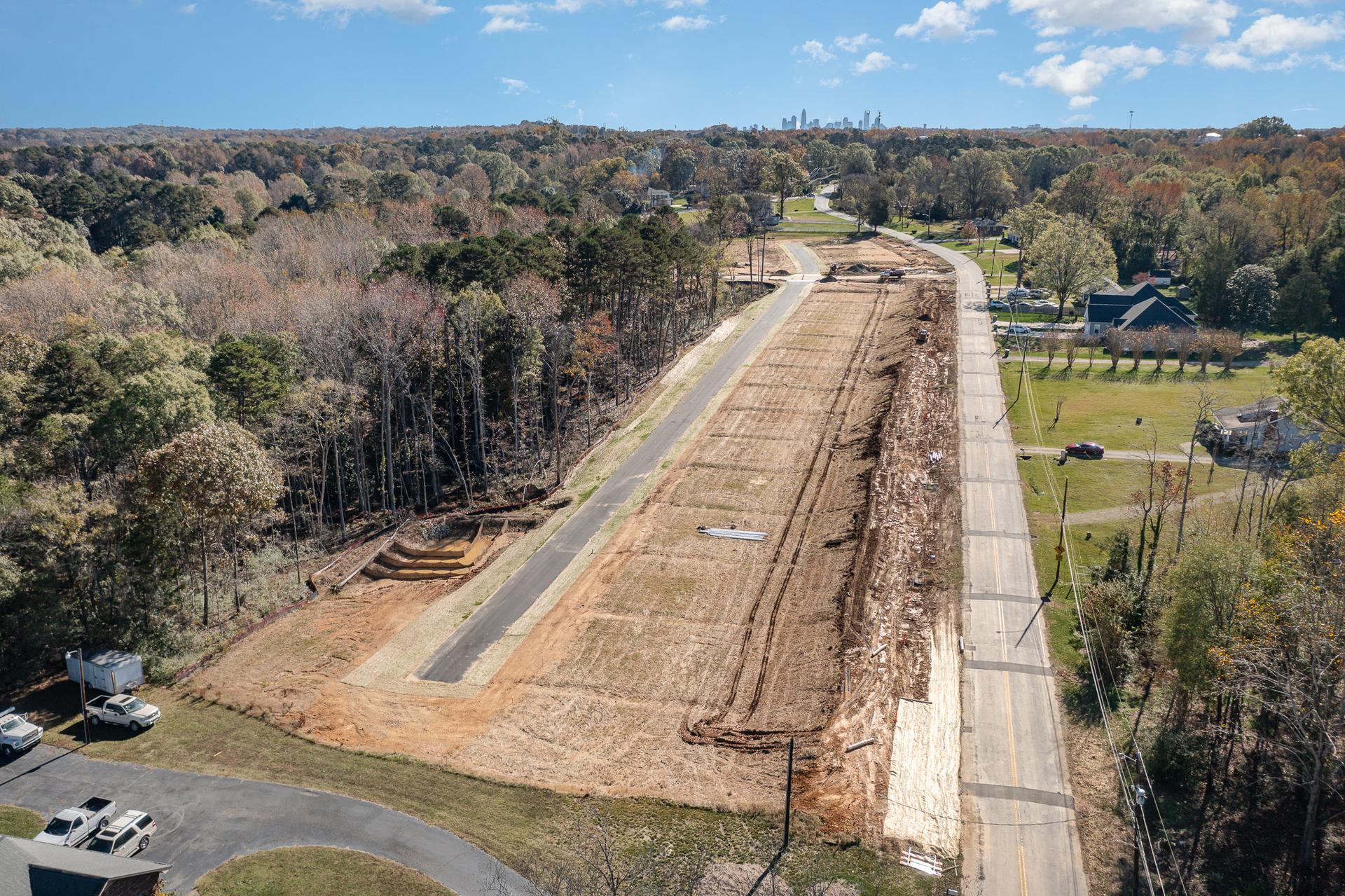
- Construction plans and permits. Grading, erosion control, stormwater, water and sewer, and street design.
- Vested rights. The legal protection that locks in the rules your approved plan was reviewed under.
The land entitlement process, step by step
The order changes by jurisdiction, but most residential projects in South Carolina and North Carolina follow this sequence:
- Feasibility. Confirm current zoning, the future land use map, utility availability, flood zones, wetlands, access, and title. This tells you whether the plan is by right or needs a rezoning.
- Pre-application meeting. Meet with planning staff. Charlotte requires a presubmittal meeting before any rezoning is filed, and Greenville County requires a pre-submittal conference for its review districts at least ten business days before the application deadline.
- Rezoning application, if needed. File the application, fee, and any concept plan by the published deadline.
- Notice and public hearing. Signs go on the property, notices go to neighbors, and the governing body holds a hearing.
- Recommendation and vote. The planning commission recommends; the elected body decides.
- Preliminary plat or site plan. Staff or the planning commission reviews the lot layout.
- Construction plans and permits. Engineering plans for grading, stormwater, streets, water, and sewer are approved.
- Infrastructure and final plat. Streets and utilities are built or bonded, and the final plat is recorded.
Rezoning: South Carolina vs. North Carolina
Rezoning is the step most likely to stall a project. The two states write the notice rules differently.
South Carolina
- State rule. Under S.C. Code § 6-29-760, a zoning amendment needs a public hearing. Where the local government has no established procedure, at least 15 days' newspaper notice is required. For a map change, notice must be posted on or next to the property, visible from each abutting public road.
- Challenge window. A challenge to the notice or validity of the decision cannot be brought more than 60 days after the governing body acts, if the process substantially complied with the law.
- Greenville County example. The county's 2026 rezoning brochure requires the applicant to post the hearing signs at least 15 days before the hearing. County Council holds the hearing, the Planning Commission meets the fourth Wednesday of the month, and Council gives the request three readings. Approval takes a simple majority of 7 votes, or at least 8 if the Planning Commission or committee recommended denial. A denied request cannot come back for the same or a more intensive district for one year.
North Carolina
- State rule. Under N.C. Gen. Stat. § 160D-602, notice of a map amendment hearing must be mailed to the owners of the affected parcels and all abutting parcels at least 10 but not more than 25 days before the hearing. A notice must also be posted on the site or on the adjacent right of way.
- Charlotte example. Charlotte's rezoning application packet separates conventional rezonings, with no site plan, from conditional rezonings, which require a site plan and a community meeting. Notices for that meeting must be mailed at least 10 days in advance. Petitions are due the fourth Monday of each month, City Council holds the hearing with the Zoning Committee, and Council makes the final decision.
Subdivision plats and site plans
Once zoning allows the use, the layout still needs approval. In South Carolina, § 6-29-1130 lets local land development regulations set block and lot sizes, street grading and surfacing, and utility installation. It also lets them require land for streets, school sites, and recreation. No plat is approved unless the land meant for building sites can be used safely for building.
South Carolina also puts a clock on review. Under § 6-29-1150, local rules must set time limits of no more than 60 days for action on plats and plans. If the reviewing authority fails to act within 60 days of a complete submittal, the plan is considered approved. A staff decision can be appealed to the planning commission, which must act within 60 days, and from there to circuit court within 30 days of notice.
Grading, erosion control, and stormwater permits
You cannot clear and grade a subdivision on a zoning approval alone. Both states require land disturbance permits once a site crosses one acre.
- South Carolina. The SC Department of Environmental Services requires construction stormwater coverage for any project that disturbs more than one acre, or that is part of a larger common plan disturbing one acre or more. The application includes a Stormwater Pollution Prevention Plan. The current general permit took effect March 30, 2026, and expires March 30, 2031.
- North Carolina. NC DEQ requires an erosion and sedimentation control plan when land disturbance will exceed one acre. The plan must be submitted 30 or more days before work starts and approved before any disturbance. Some local governments run their own programs, and those can be stricter than the state's.
Vested rights: how long an approval protects you
A vested right locks in the rules your plan was approved under, so a later ordinance change does not cut your lot count. The two states set different terms.
- South Carolina. Under the Vested Rights Act, § 6-29-1530, approval of a site specific development plan creates a vested right for two years. The local government must approve at least five annual extensions unless it has adopted an amendment that prohibits them. A local government may also vest an approved phased plan for up to five years.
- North Carolina. Under § 160D-108.1, a site-specific vesting plan, such as a subdivision plat, vests for two years, and a local government may allow up to five. Under § 160D-108, a multi-phased development of 25 acres or more vests for seven years from site plan approval of the first phase. Local development permits expire one year after issuance unless work has substantially begun.
North Carolina also has a permit choice rule. If the rules change between your application and the decision, you can choose which version applies.
How entitlement status changes what land is worth
Raw land and approved lots are different products. On raw land, the buyer carries the chance of a denial, a smaller lot count, conditions that add cost, and months of carry while the approvals move through monthly calendars. On an approved plat, most of that risk is gone.
A builder pricing a tract works backward from the homes the land can support, and the approval path sets that number. The residual land value method shows how lot count, development cost, and time feed the land price. If the land entitlement process on a site is still uncertain, expect the price to reflect it, or expect the purchase agreement to tie closing to the approvals. Landowners weighing a sale can start on the sell us your land page.
Frequently asked questions
How long does the land entitlement process take?
There is no statewide number. A by-right subdivision skips the rezoning and starts at plat review, where South Carolina caps review at 60 days per complete submittal. A rezoning adds a monthly hearing and vote cycle. Greenville County, for example, gives a request three Council readings. Each round of plan revisions adds time.
What is the difference between zoning and entitlement?
Zoning is one entitlement. It sets the allowed use and density. Entitlement is the full set of approvals needed to build: zoning, any variance or special exception, the subdivision plat or site plan, construction plans, and the land disturbance and utility permits. Land can be zoned correctly and still lack approved lots.
Does entitlement increase land value?
It usually does, because it removes the risk of denial and fixes the lot count. A buyer of raw land prices in the cost, time, and chance of failure. The size of the change depends on the market and on what the approvals allow.
Can I sell land before it is entitled?
Yes. Many tracts sell raw. The buyer then takes on the approval risk, and the purchase agreement often includes a due diligence period and conditions tied to zoning or plat approval. The price reflects who carries that risk.
What happens if a rezoning is denied?
The land keeps its current zoning. Many jurisdictions limit reapplication. In Greenville County, a denied request cannot be refiled for the same or a more intensive district for one year from the denial. You can still develop under the existing district or challenge the decision in court.
Talk to our development team
Red Cedar Homes works with landowners and lot developers in Charlotte, Greenville, and Spartanburg. If you hold a tract or approved lots, see the communities we build in, then talk to our development team about what your site can support on the build with Red Cedar page or at 980-890-9381. If you already own finished lots, compare a fee build on your own lot with a lot sale.
Sources
- S.C. Code of Laws, Title 6, Chapter 29 (§§ 6-29-760, 6-29-800, 6-29-1130, 6-29-1150, 6-29-1530)
- N.C. Gen. Stat. § 160D-602, Notice of hearing on proposed zoning map amendments
- N.C. Gen. Stat. § 160D-108, Permit choice and vested rights
- N.C. Gen. Stat. § 160D-108.1, Vested rights; site-specific vesting plans
- Greenville County Planning and Zoning, Rezoning Brochure and 2026 Schedule
- City of Charlotte, Rezoning Application Packet
- SC Department of Environmental Services, NPDES Construction Stormwater Fact Sheet
- NC DEQ, Erosion and Sediment Control FAQs
Figures as of October 2026. This is general information, not legal or tax advice. Talk to your attorney or CPA about your situation.