Red Cedar Homes
Big Builders Are Tightening Land Budgets: What Landowners Should Know
Meritage cut land spending by almost 40%, and D.R. Horton reported fewer lots under control. Land with clean title, zoning, and utility facts moves first.
On October 28, Meritage Homes reported $329 million in land acquisition and development spend for the third quarter of 2026, down from $528 million a year earlier. Meritage cut land spending by almost 40%, and D.R. Horton reported fewer lots under control a day later. If you are selling land to a builder in the Carolinas, the land that draws offers now is land a builder can underwrite quickly. You can submit your property to Red Cedar Homes for a review at any time.
What builders reported for the third quarter
Two public builders released results in the last week of October. Both reported fewer lots owned or controlled than a year earlier.
- Meritage Homes (October 28): Land acquisition and development spend, net of land development reimbursements, was $329 million in the third quarter, versus $528 million a year earlier. The company owned or controlled about 71,800 lots on September 30, 2026, down from about 80,800 a year earlier. CEO Phillippe Lord said the company "pulled back our land investments by almost 40% year-over-year." Executive Chairman Steven J. Hilton said, "we intentionally focused on preserving margins rather than pursuing a higher sales pace."
- D.R. Horton (October 29, fiscal year ended September 30): The company owned or controlled 570,600 lots, down from 591,900 a year earlier. About 77% of those lots were controlled through purchase contracts rather than owned. Of the homes it closed in fiscal 2026, 68% "were on lots developed by Forestar or third parties, up from 65% during fiscal 2025." Executive Chairman David Auld said "rising mortgage rates, affordability constraints and cautious consumer sentiment continued to pressure new home demand."
Meritage also reported a third quarter average sales price on orders of $383,000, down 2% from a year earlier, citing higher use of incentives and related costs, including rate buy-downs, and geographic mix. Lower net home prices flow straight into what a builder can pay for land.
Why a tighter land budget changes the offer
Builders price land by residual value. They start with what the finished homes will sell for, subtract the cost to develop the lots and build the homes, subtract their target margin, and what is left is the land value. Our guide on how builders value land walks through the math.
When home prices soften or incentives rise, the residual shrinks unless costs fall too. In our view, a builder that puts margin ahead of pace is more likely to pass on land that carries open questions. More review now goes to three items:
- Entitlement status. Land already zoned for the planned use carries less risk than land that still needs a rezoning. See our explainer on the land entitlement process.
- Utilities. Builders want to know whether public water and sewer reach the site, who serves it, and whether capacity is available.
- Lot count. The number of buildable lots after roads, stormwater, setbacks, and buffers drives the whole offer. A lower count means a lower residual value.
"A builder needs three things from a seller up front: clean title, a clear answer on zoning, and whatever you know about water and sewer," said Bryan De Bruin, CEO of Red Cedar Homes. "If you have a survey or an old site plan, send it. It saves everyone time."
What to prepare before selling land to a builder
You do not need a full engineering package to start a conversation. You do need the basics in one place so a builder can screen the property:
- The parcel number and a deed or recent title work.
- The current zoning and any recent rezoning or variance history.
- Any survey, plat, or prior site plan.
- What you know about water, sewer, and road access.
- Any known easements, wetlands, floodplain, or environmental reports.
Gaps in this list do not have to end the conversation. They change how long a builder needs to study the land and what the offer looks like.
Options and phased takedowns, explained
D.R. Horton's figures show how common it is for builders to control land without owning it. Two industry structures come up often:
- Option contract: The buyer pays a deposit for the right to buy the land or lots later at an agreed price. If the buyer does not exercise the option, the seller keeps the land and, depending on the contract, often the deposit.
- Phased takedown: The buyer closes on the land or lots in stages over an agreed schedule instead of all at once.
For a seller, these structures can widen the pool of buyers in a cautious market. The trade-off is time: you may be paid in stages, and the land stays tied up while the buyer decides. These are general industry concepts, not an offer from any builder. Every deal turns on its own contract, so review the terms with your attorney before you sign.
Local builders are still buying
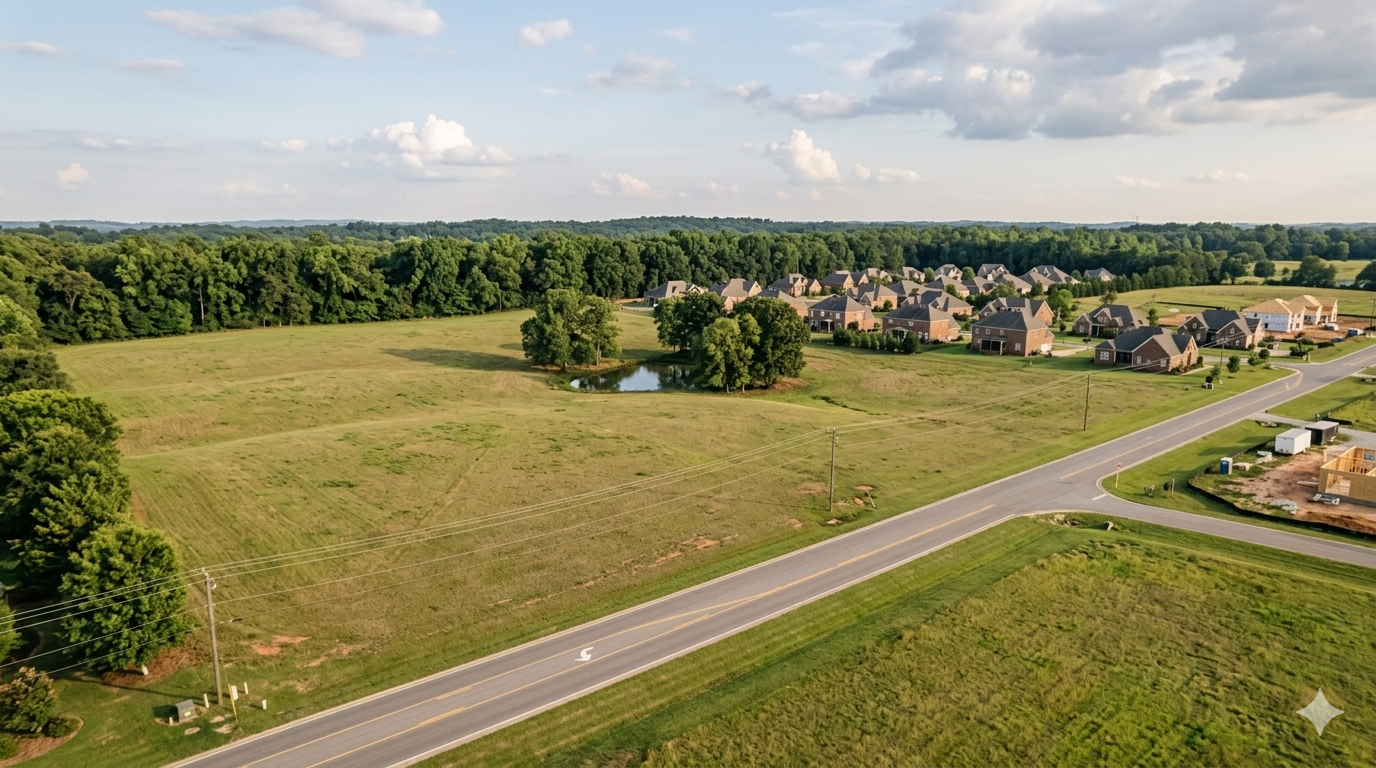
Red Cedar Homes buys residential-zoned or rezoning-eligible land, including raw land, farms, development tracts, and existing developed lots, in the Charlotte and Greenville regions and in Spartanburg.
"Builders who know their markets lot by lot are still buying land," De Bruin said. "The difference this year is that the land with clean information moves first."
Frequently asked questions
Do builders still buy land when home sales slow?
Yes. The third quarter reports show builders buying less, not stopping. Meritage still spent $329 million on land in the quarter. Expect more questions and closer review before an offer.
What does a builder look at first when you are selling land to a builder?
Title, zoning, utilities, and how many lots the site can hold. Those four items set the residual value and how much study the land needs.
How do builders decide what to pay for land?
Most use residual value: expected home prices minus development cost, construction cost, and target margin. When incentives rise or costs climb, the land value that remains goes down.
Submit your property to Red Cedar Homes
If you own land in our markets and want a direct answer, submit your property with whatever information you have. You can read more about how we work with partners on our Build with RCH page, or contact our team at 980-890-9381.
Sources
- Meritage Homes, Meritage Homes Reports Third Quarter 2026 Results, October 28, 2026
- D.R. Horton, fiscal 2026 fourth quarter and full year results, Exhibit 99.1 to Form 8-K, October 29, 2026
Figures as of November 2026. This is general information, not legal or tax advice. Talk to your attorney or CPA about your situation.